
The bankruptcy automatic stay can put at least a temporary halt to many kinds of creditor actions against you, like debt collection efforts and lawsuits. In some cases, if your Arizona landlord is a “creditor” because you are behind on your rent payments, then if you file for Chapter 7 bankruptcy, the automatic stay may be temporarily effective in stopping eviction proceedings against you while your bankruptcy case is ongoing.
The automatic stay in Chapter 7 is not a cure-all for evictions, and in some cases, it may have no effect.
Stone Rose Law bankruptcy lawyers can give you legal advice and representation if you are facing eviction in Arizona because of overdue rent payments. Here, we specifically consider how Chapter 7 bankruptcy interacts with Arizona’s landlord-tenant laws when you are being threatened with an eviction judgment.
To learn more and to schedule an appointment with one of our experienced bankruptcy lawyers, call Stone Rose Law at (480) 739-2448 or contact us online.
How Does the Chapter 7 Automatic Stay Affect Evictions in Arizona?
The effect of Chapter 7 bankruptcy on an eviction legal proceeding depends on multiple factors. Two of the most important are how far along the eviction lawsuit is and whether the eviction is due to unpaid rent or other alleged lease violations.
How Timing Can Influence Chapter 7 and Eviction
Arizona’s eviction process can move swiftly, catching many renters off guard. This is because Arizona law structures the eviction process as a summary proceeding with short notice periods, limited opportunities for tenants to seek continuances, and hearings that can occur with only a few days’ notice.
When everything lines up for the landlord, and the tenant does not contest the case, an eviction can move from notice to lockout in about 2 or 3 weeks. If the tenant contests the eviction, it can take 3 to 6 weeks on average.
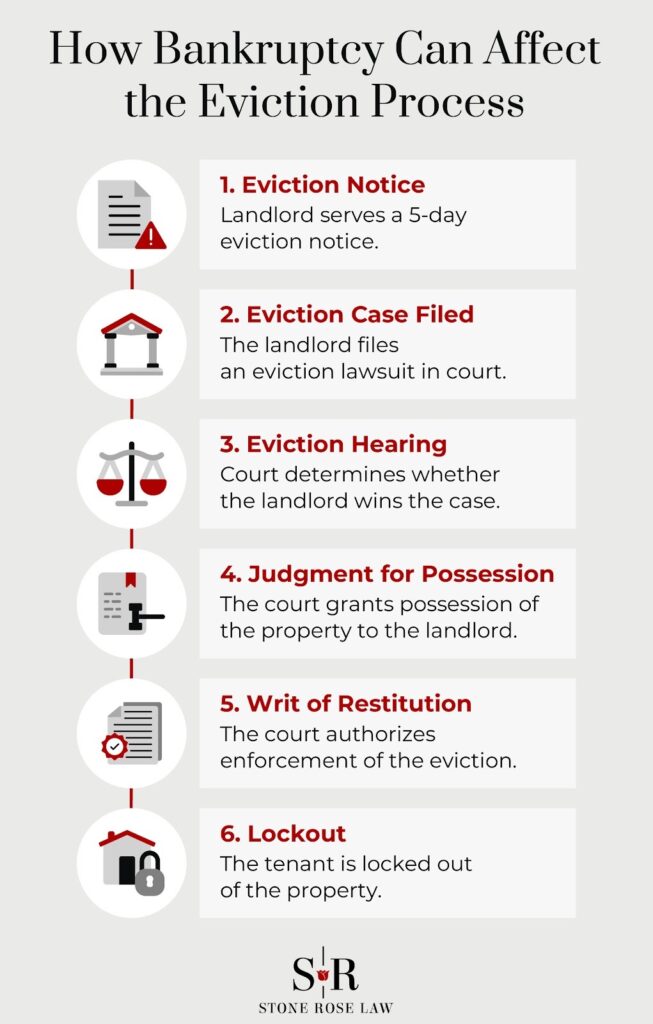
Here is a sample schedule for an uncontested eviction proceeding in Arizona:
- Day 1: The landlord starts the process by serving you a 5‑Day Notice of eviction
- Day 6: The eviction notice expires
- Day 7: The landlord files an eviction action in court
- Day 10: The court holds an eviction hearing
- Day 11: The court issues an eviction order in the form of a judgment for possession
- Day 16: The court issues a writ of restitution
- Day 17: Lockout from the premises begins
The significance of this accelerated schedule is that the earlier you file for bankruptcy if you are facing a possible eviction, the more effective the automatic stay will be in giving you more time.
You must act fast.
The ideal time to file for Chapter 7 is before your landlord commences an eviction action against you. This will give you the most protection under the automatic stay because it will prevent your landlord from filing the eviction lawsuit, and accordingly will give you the most time, usually about three or four months (the typical duration to discharge a Chapter 7 case).
Once your landlord has filed an eviction action, the effect Chapter 7 bankruptcy can have depends in part on what point in the lawsuit you are at when you file. Here, we need to consider whether the landlord has obtained a judgment of possession against you:
- If the landlord has obtained a judgment of possession before the bankruptcy filing, Chapter 7 generally will not stop the eviction, unless the debtor qualifies for and properly invokes the limited temporary stay under 11 U.S.C. § 362(l).
If the landlord has already filed an eviction case against you, the landlord can file a motion with the bankruptcy court to lift the stay. These motions are often granted. Once the stay is lifted, the landlord can proceed with the eviction process in an Arizona state court.
How Non-Lease Violations Can Affect Evictions
Chapter 7 bankruptcy can provide you with some relief from eviction if it is based on past-due rent, but it will not have any effect on an eviction action based on a violation of your lease for other reasons, like damage to the leased premises or allegations of prohibited activity like illegal drug use.
Even if the Chapter 7 automatic stay originally applies to an overdue rent case, if the alleged property endangerment or illegal activity has occurred within the past 30 days, the landlord can file a sworn certification and use that to justify resuming the eviction. In this case you have 15 days to object to the landlord’s claims in the certification, in which case the bankruptcy judge will hold a hearing to decide whether the eviction can go on.
What Other Limitations Exist on Chapter 7 Eviction Relief?
The bankruptcy automatic stay is not ironclad. In addition to the non-lease-violation exception above, a landlord can file a motion with the bankruptcy court to lift the stay upon a showing of cause, such as the debtor’s inability to pay rent going forward.
Also, if you had one prior bankruptcy case dismissed in the past year, the automatic stay generally lasts only 30 days unless extended. If you had two or more cases dismissed in the past year, the automatic stay does not go into effect at all unless the court orders otherwise.
Is Chapter 13 Bankruptcy a Better Option When You Face Eviction?
Depending on your situation, you may consider Chapter 13 bankruptcy instead of Chapter 7 if you are facing overwhelming debt. Although there can be several factors in your decision about which of these two forms of bankruptcy to choose, when it comes to stopping or delaying an eviction judgment for possession against you, here are some of the key differences between Chapter 7 bankruptcy and Chapter 13 bankruptcy.
| Feature | Chapter 7 | Chapter 13 |
|---|---|---|
|
Duration of Stay |
Three to five months | Three to five years (while your debt repayment plan is active) |
| Back Rent | Usually discharged, but eviction can still proceed | Must be repaid through a court-approved debt repayment plan |
| Landlord Motion to Evict | Usually granted | Less likely to be granted if you can pay rent on an ongoing basis |
| Best For | Buying time to move or negotiate | You want to stay in the leased premises |
Is Your Landlord Threatening You With Eviction in Arizona?
As we have shown above, once your landlord serves you with a notice of eviction for back-due rent, you have little time to respond. This is why it is important to contact an experienced Arizona debt relief attorney to review your legal options.
At Stone Rose Law, during a free consultation with a skilled Arizona bankruptcy attorney, we can help you review your legal options in the face of an eviction action and act quickly. We can:
- Look for legal defenses to the eviction, including landlord mistakes in serving the legal documentation on you, that can give you more time to respond and consider whether Chapter 7 bankruptcy is right for you.
- Advise you on alternatives to a bankruptcy filing to avoid eviction, including negotiating with your landlord.
- Help you prepare your legal response to an eviction proceeding.
- Advise you on which form of federal bankruptcy law is best for your circumstances.
- Help you file your bankruptcy petition in a timely way to delay or stop an eviction action.
To speak with an experienced Arizona bankruptcy lawyer, call Stone Rose Law at (480) 739-2448. You can also schedule a free consultation with us by using our online contact form.
The post Can I be Evicted if I File Chapter 7 Bankruptcy? appeared first on Stone Rose Law.