
If you are wondering whether utility bills can be included in Chapter 7 bankruptcy, the short answer in Arizona is yes. Past-due balances on your electric, gas, water, phone, and internet bills are generally treated as unsecured debts, which means they are dischargeable when your case closes.
There are a few important conditions, though, including a 20-day deposit rule and a narrow fraud exception that can pull a utility debt back out of your discharge.
When you file for Chapter 7 bankruptcy in Arizona, this kind of liquidation bankruptcy will stop bill collectors and creditor lawsuits through its automatic stay, and upon discharge, will eliminate most unsecured debt. If you are behind on your utility bills, these will be among the discharged debts you will be free from once the U.S. Bankruptcy Court closes your case.
The discharge of your utility bills is subject to some restrictions. For example, you must continue to pay your utility bills incurred after you file your bankruptcy petition paperwork, and you must take action after filing to ensure that your utility service continues during your case.
In this article, we cover the basics of how Chapter 7 bankruptcy interacts with your utility bills, focusing on how you can discharge past-due utility account balances while ensuring continuation of service through your bankruptcy discharge.
To speak with one of our Arizona bankruptcy law professionals, call us at (480) 739-2448 or use our online contact form to schedule a free initial consultation.
Immediate Protection from Utility Shut-Off: The Automatic Stay
In many cases, by the time you are thinking about bankruptcy relief, you are already in trouble with some or all of your creditors, including utility providers like your electric or gas company, water and sewer service, trash collection, or your phone or internet carrier.
They are threatening to shut off your service. Some may have already filed debt collection lawsuits against you. So, one of your priorities may be to stop these ongoing activities. This is where the bankruptcy automatic stay can help you.
When you file a Chapter 7 bankruptcy petition, the bankruptcy court will immediately order an automatic stay. The effect of this stay is to put an immediate halt to all ongoing debt collection activities:
- No more harassing phone calls about your utility bill
- No more collection agency activities against you
- Any lawsuits already filed against you have been stopped
- Any ongoing garnishments against your income or bank accounts stop
With your utility providers, this can make the difference between having those services shut off or keeping them going and giving you breathing space on past-due bill collections.
Specifically, under federal bankruptcy law (11 U.S.C. § 366(a)), once you file for bankruptcy, your utility providers cannot alter, refuse, or discontinue your service because you have filed or because you owe them for past-due, pre-petition amounts.
Once you file, you should provide your bankruptcy case number and filing notice to each utility.
Adequate Assurance: The 20-Day Rule to Keep Utilities Connected
When it comes to working with your utility providers, the bankruptcy automatic stay is an immediate, but only temporary solution. Under 11 U.S.C. § 366(b), the no-shutoff period of the automatic stay lasts for only 20 days after you file. To ensure you can keep service after those first 20 days, you will need to meet the adequate assurance requirements.
Adequate assurance generally means providing each of your utility providers with assurance that you will pay for your post-petition services. What this means is that within 20 days of filing your bankruptcy petition, you will need to pay a security deposit to your utility companies. If you do not do this, these companies can disconnect your service.
What Counts as Adequate Assurance?
Federal bankruptcy law lists specific forms of assurance for utilities. These can include:
- Cash deposits (the most common option)
- Prepayment
- A letter of credit
- A certificate of deposit
- A surety bond
- Another mutually agreed-upon form of security
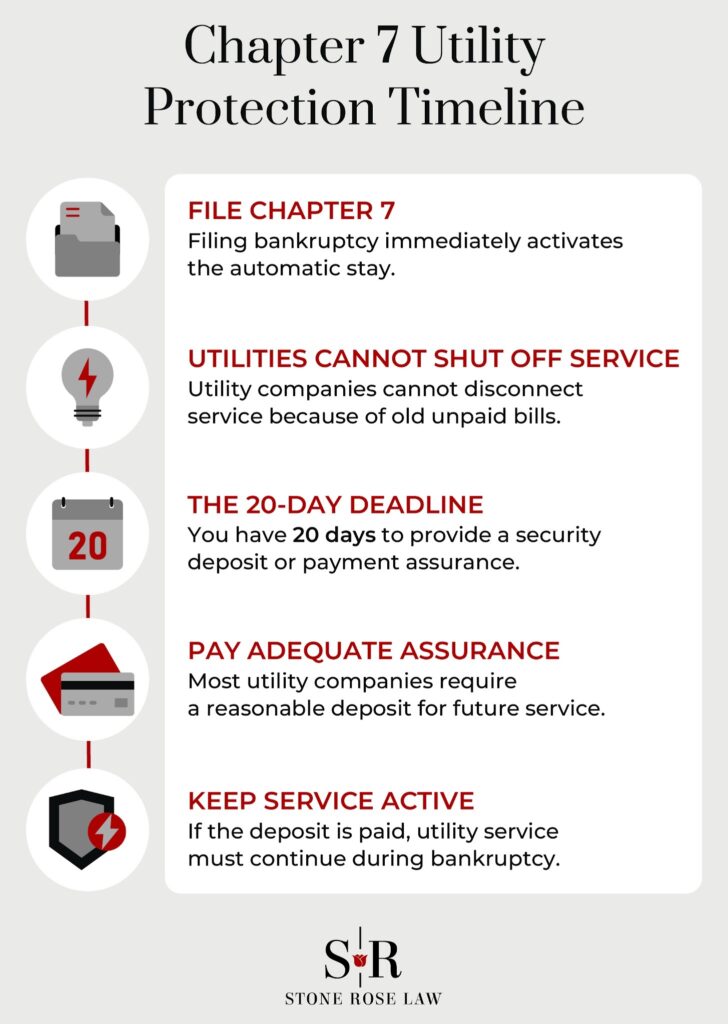
The amount of a cash deposit can vary. You are required by law to pay a reasonable amount, which usually means one or two months’ worth of utility service based on your average bill.
If you already have a deposit on hand with the utility company, that utility may apply your existing deposit to your pre-petition balance rather than count it toward your post-petition adequate assurance. If that happens, you will likely need to post a new deposit to keep your service going during your case.
If you believe that the assurance amount a utility company is asking for is unreasonable, then you can file a motion with the bankruptcy court to review and adjust it. The court can then hold a hearing on whether to adjust the assurance amount.
What if Service Was Shut Off Before Your Bankruptcy Petition Filing?
If the utility company has already disconnected your service before you submit your petition in Chapter 7 bankruptcy, then the utility must restore service once you file and provide adequate assurance under Section 366(b). If the utility refuses, the court can order restoration.
Fraud Claims by Utility Companies
In some cases, a utility company may claim that you wrongfully obtained service — for example, by tampering with a meter, reconnecting your service yourself after a shutoff, or giving false information when you opened the account.
Under 11 U.S.C. § 523(a)(2)(A), a debt for services obtained by false pretenses, false representation, or actual fraud is not dischargeable in Chapter 7.
To pull a utility debt out of your discharge on this ground, the utility company has to file an adversary proceeding inside your bankruptcy case and prove the fraud to the bankruptcy judge by a preponderance of the evidence.
The utility also has a deadline — typically 60 days after the first meeting of creditors — to file that adversary proceeding. If it misses the deadline, the fraud exception is waived.
What this means in practice is that ordinary unpaid utility bills, even very large ones, are not fraud. Falling behind on your account or being disconnected for nonpayment does not make your utility debt nondischargeable.
The fraud exception is reserved for situations where you actively misrepresented something to the utility company or improperly took service you weren’t paying for.
If a utility company threatens a fraud objection to your discharge, talk to your Stone Rose Law bankruptcy attorney right away.
What About Municipal Utility Providers?
In some Arizona towns and cities, utilities such as water, sewer, and trash collection will be publicly owned.
Past-due amounts you owe to public entity utilities are still dischargeable under Chapter 7. Still, if the utilities were servicing you on real property that you own, then they may be able to place municipal liens on that property. These liens are not discharged in a Chapter 7 bankruptcy.
What this means is that if you sell or refinance property subject to such a municipal lien, then you will have to satisfy the lien as a precondition to the sale or refinancing.
Paying Utility Bills During and After Bankruptcy
The main effect of bankruptcy on your utility bills is on what you owed before filing the bankruptcy petition. After that, you must still make an effort to pay for your ongoing service during the processing of your case before the bankruptcy court. If you fall behind on these current payments, then you may still face an eventual shut-off of utility service.
Once the court discharges your Chapter 7 bankruptcy case, you must also stay current with your utility bills after your fresh start, or you can find yourself in the same trouble with your utility providers that you were in before you filed.
Also, even though their pre-petition past-due amounts owed will be discharged, post-discharge, your utility service providers may still terminate your service or require you to sign a new contract, possibly with a deposit or new service terms.
The table below summarizes how Chapter 7 affects your pre-bankruptcy and post-bankruptcy utility debts.
| Category | Pre-Petition Utility Debt (Before Filing) | Post-Petition Utility Charges (After Filing) |
|---|---|---|
|
Is the past-due amount included in a Chapter 7 bankruptcy? |
Yes. You must list past-due utility bills from before your filing date as unsecured debts in your Chapter 7 case. These pre-filing utility debts are generally dischargeable. |
No. Utility charges you incur after filing your Chapter 7 case are new debts and are outside the bankruptcy. Your current bankruptcy does not cover post-filing debts and will not be discharged. You must pay these bills as they come due to keep your service. |
| Protection from Shut-Off | The bankruptcy automatic stay and 11 U.S.C. § 366(b) apply. From the moment you file Chapter 7 bankruptcy until 20 days afterward, a utility cannot disconnect or refuse you service because of your bankruptcy or an unpaid pre-petition balance. This immediate protection remains in place while you arrange an adequate assurance deposit. |
No special protection. Falling behind on your post-petition bills can result in disconnection of your service under normal procedures, because the bankruptcy automatic stay does not stop utilities from acting on new unpaid bills. |
| Keeping Service Going | You must provide adequate assurance. You have 20 days from filing for Chapter 7 to pay a reasonable deposit or security to each utility for future service. If you do this, then the utility must continue your service throughout your bankruptcy and beyond. |
You must pay ongoing bills on time. To keep service after your bankruptcy, stay current on new utility charges. The Chapter 7 process aims to free up funds so you can afford these necessary ongoing expenses going forward. |
| Status of Debt After Case | Pre-petition utility debts are discharged by Chapter 7. The utility provider cannot collect those old charges from you later. Any lien for such debt on your real property may survive, but your personal liability is eliminated. |
Post-petition utility charges remain your responsibility even after bankruptcy. Chapter 7 does not discharge these debts, and you must pay them like normal household bills. |
Do Any Arizona-Specific Bankruptcy Utility Laws Exist?
Arizona follows federal bankruptcy law regarding utility treatment in Chapter 7. No Arizona-specific bankruptcy rules affect the standard 20-day deposit requirement or the dischargeability of utility debt; these are governed by federal law that applies in Arizona’s bankruptcy courts.
Does Bankruptcy Clear Utility Bills in Arizona?
To sum up, in Arizona, under Chapter 7 bankruptcy, you can discharge your past-due utility bills as unsecured debts. New utility charges you incur after filing for bankruptcy are not included in your Chapter 7, so you must still pay them on time to avoid service disconnection in the future.
The bankruptcy automatic stay will stop utility companies from shutting off your service or continuing with any ongoing collection efforts. Still, within 20 days, you must provide them with adequate assurance to make sure that your service continues during the bankruptcy court’s processing of your case.
Before filing bankruptcy on your utilities, consider how much the adequate assurance amount will be compared to how much is actually owed. Most utility companies will make arrangements for past-due balances.
A Stone Rose Law bankruptcy attorney can help you with your Chapter 7 bankruptcy filing, including notifying your utility providers of your filing. We can also help you in any case where a utility provider is making an unreasonable demand for adequate assurance or is still threatening to shut off your service while your case is underway.
To learn more about our Chapter 7 bankruptcy services or to schedule a free initial consultation with one of our experienced Arizona bankruptcy attorneys, call us at (480) 739-2448 or contact us online.
The post Can Utility Bills Be Included in Chapter 7? appeared first on Stone Rose Law.