
“Boarding” is the practice of leaving patients on gurneys in the emergency department while waiting for a bed to open up for them in the hospital. It is occurring frequently and its frequency is only getting worse. According to the statistics, those most likely to be affected are seniors.
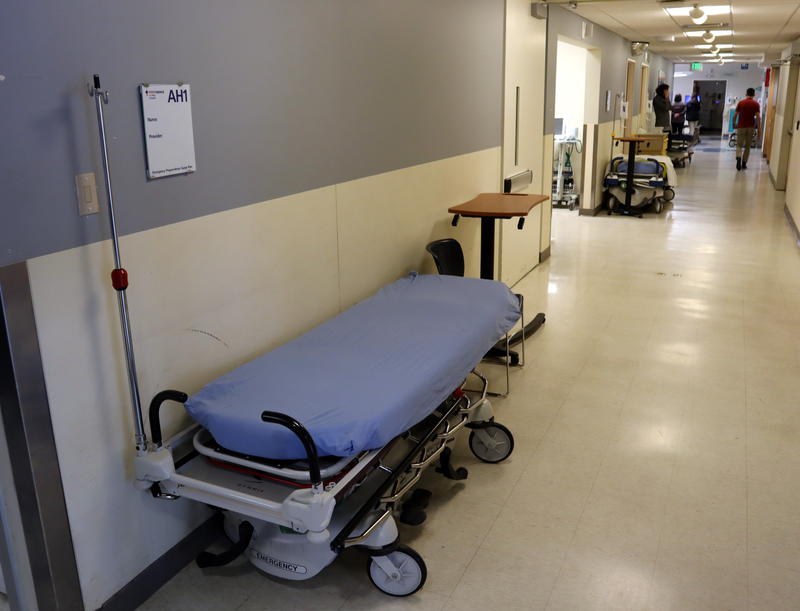
It happens all the time. A patient is brought to the emergency department. After an examination and perhaps some tests, the emergency medicine physician concludes the patient needs to be admitted to the hospital for more care. Often, although the patient is ready to be transferred to the floor, the hospital does not have a bed ready and the patient must remain in the emergency department until a bed opens up. The patient’s bed is wheeled out of the emergency department examination bay and into a nearby hallway. Sometimes the wait is brief, but on other occasions the patient may wait and wait and wait.
The emergency department doctor and the doctor, who agreed to admit the patient to the hospital and to care for them while there, did so because they believed the patient needed care that he or she could not get at home or in the emergency department. However, whatever care the patient needed, he or she is not going to get it on a gurney in the emergency department hallway.
The emergency department is geared for the treatment of emergencies. It is not geared for the long-term care of patients. It does not have personnel available to care for patients awaiting a bed upstairs. It may not even have the staff it needs to care for the emergency patients coming in the door. All this means that the patient awaiting a bed is an orphan. No one is responsible for giving them the close monitoring their condition may require. No one is regularly checking their vital signs. No one is delivering to them the medicines they may need. No one is taking them to the bathroom. They are probably not getting fed regularly. No one is giving them the comforting care a sick person needs. Sometimes, very bad things happen as a result.
Not long ago, I reviewed a case in which a woman fell at home and struck her head on the bathroom floor. 911 was called and she was brought to the emergency department. At the emergency department, the doctor caring for her was concerned that she might have suffered a brain bleed. He ordered CT scans of the head, which were correctly read as negative. It appeared as though she had dodged a bullet. Since she needed more care to determine why she fell and treatment in the event a brain bleed developed later, he arranged for her to be admitted to the hospital. The hospital did not have a bed for her. She was placed in a hallway to wait. About ten hours later a bed opened up and she was taken to her room. Upon arrival, the nurses discovered that she was paralyzed from the neck down. Emergency CT scans of the head confirmed that there was now a large brain bleed, which had caused so much pressure inside the skull that the part of her brain that controlled movement had been permanently damaged. Had she been on the floor, it is highly unlikely that the nurses would have missed her deteriorating condition. While no one was watching her in the emergency department hallway, she had become a quadriplegic. I am sure I don’t have to tell you that this should never happen.
So why is this happening and why is it becoming more common. There appear to be several answers. One is that hospitals are still short of nurses and other staff necessary to care for patients. The problem was a problem before the pandemic and the pandemic has only made it worse.
Another reason is the aging of society. Older people have more health issues and are more likely to end up in an emergency department than a 20 year old. Their conditions are often not so acute that they get first priority for an open bed. This means that seniors are more likely to be boarded and to find themselves waiting and waiting for a bed. When senior are boarded, their conditions often deteriorate. Hospital death is more likely if a senior has had to spend the night in the emergency department.
Hospitals themselves have some responsibility. There is substantial evidence that hospitals are setting aside beds for patients who are scheduled for lucrative surgeries.
If you are going to the emergency department, try and bring an advocate with you. This is a good idea for any hospitalization. An advocate can push for you to be fed and taken to the bathroom. Bring your medications from home in case you don’t get to the floor in time for the nurses there to deliver your normal medications to you. Bring reading glasses and your hearing aids. Bring or have someone bring you reading material. Have someone bring you food and drink, if you cannot get to the cafeteria. If you can, try to get up and walk around. Health care professionals also recommend sleep masks and earplugs. Emergency departments are noisy and active all night. They are not good places to catch some sleep. Do your best not to let them kill you.
The post Boarding – The Hospital Practice You Didn’t Even Know You Should Be Worried About first appeared on Sandweg & Ager PC.