
Filing for bankruptcy is a major financial decision. There are real consequences of filing bankruptcy, such as damaging your credit score, but important protections can help people regain financial stability after overwhelming debt.
It is important to understand both the drawbacks and the benefits before deciding whether bankruptcy is right for you.
At Stone Rose Law, we help Arizona residents evaluate their options and determine whether bankruptcy is the best path forward.
Contact our office at (480) 739-2448 or use our online contact form today to schedule a consultation with an experienced bankruptcy attorney.
Common Issues When Filing
The consequences of bankruptcy depend on your financial situation and whether you file Chapter 7 or Chapter 13 bankruptcy.
Some of the most significant consequences include:
- Damage to your credit score
- A bankruptcy notation appearing on your credit report
- Possible loss of non-exempt assets
- Certain debts surviving bankruptcy
- Filing becoming part of the public record
- Waiting periods before another bankruptcy discharge is available
At the same time, bankruptcy also provides significant protections, including the automatic stay, which immediately stops most collection activity.
For many people, the long-term financial benefits outweigh the short-term consequences.
The Means Test
Individuals considering Chapter 7 must often complete the means test.
The means test compares household income to the state median income and evaluates certain allowable expenses.
If a filer does not qualify under the means test, Chapter 13 may still provide debt relief through a structured repayment plan.
Credit Score Impact
One of the best-known consequences of filing bankruptcy is its impact on your credit. Most people experience a noticeable drop in their credit score after filing, but the exact decrease depends on factors such as your pre-filing score, existing debt, and payment history.
Filers who start with good credit (roughly 700 or higher) tend to see the steepest drops — often around 150 to 240 points — while those who begin with lower scores usually fall closer to 130 to 150 points. Because so much of a score reflects payment history and amounts owed, most people begin recovering within a year few years of filingdischarge.
Generally:
- Chapter 7 bankruptcy may remain on your credit report for 10 years from the filing date.
- Chapter 13 bankruptcy generally remains for seven years from the filing date. Credit bureaus typically remove it sooner than a Chapter 7 because a Chapter 13 involves repaying some or all of your debt through a court-approved plan.
Although the bankruptcy remains visible, its impact usually decreases over time as a positive credit history is established.
Many people begin rebuilding their credit much sooner than expected because:
- Collection accounts stop growing
- Past-due balances are resolved through bankruptcy
- Debt-to-income ratios often improve
- A new positive credit history can begin after discharge
Bankruptcy initially negatively affects your credit, but many lenders offer secured credit cards and other rebuilding options immediately afterward filing.
Non-Exempt Property Loss
Another important consequence involves property.
Chapter 7
One of the most direct consequences of filing for Chapter 7 bankruptcy is losing property: the bankruptcy trustee may sell certain non-exempt assets to pay creditors.
Fortunately, Arizona law provides numerous exemptions that protect many everyday necessities.
Arizona exemptions often protect property such as:
- A portion of your home equity
- Motor vehicles
- Household furnishings
- Clothing
- Retirement accounts
- Certain personal belongings
- Tools used for work
Most Chapter 7 filers do not lose all of their property because these exemptions protect essential assets.
An experienced bankruptcy attorney can review your property before filing to determine what protections apply.
Chapter 13
Unlike Chapter 7, Chapter 13 usually allows debtors to keep their property.
Instead of liquidating assets, Chapter 13 uses a court-approved repayment plan lasting three to five years.
This option is often used by individuals who:
- Have regular income
- Need time to catch up on mortgage payments
- Want to protect valuable property
- Do not qualify for Chapter 7 because of the means test
Monthly payments are distributed among eligible creditors in accordance with bankruptcy law.
Non-Dischargeable Debts
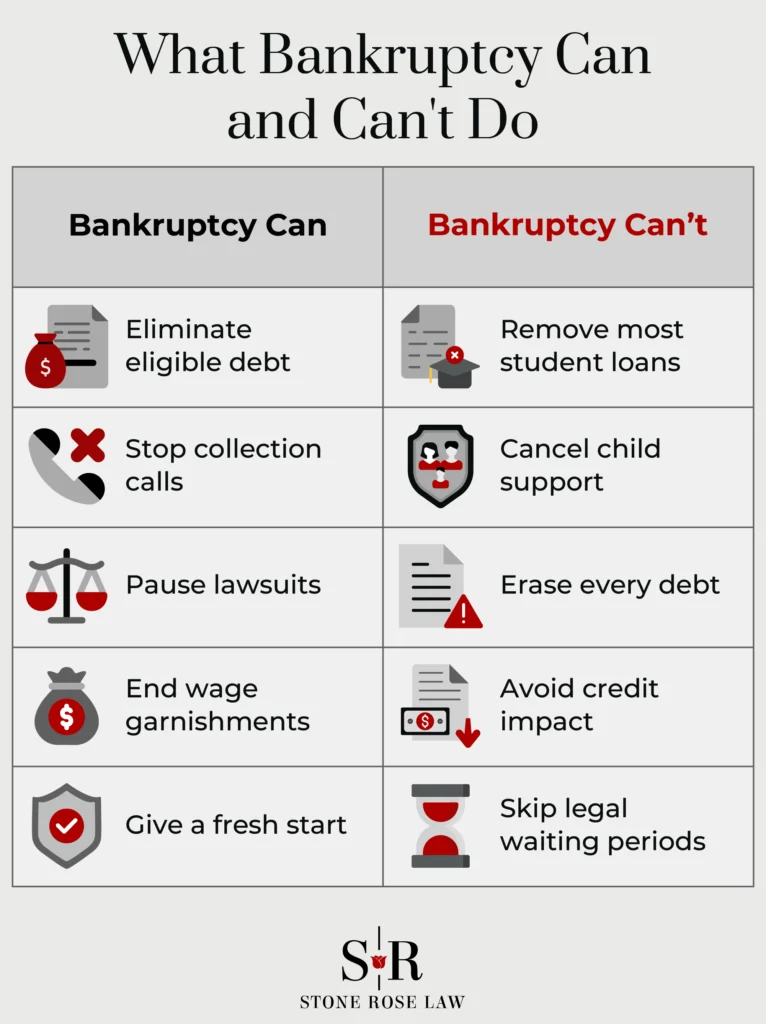
One of the most important consequences of declaring bankruptcy is that not all debts are discharged.
While many unsecured debts can be eliminated, certain obligations generally survive bankruptcy.
Common nondischargeable debts include:
- Child support
- Most alimony obligations
- Most student loans
- Many recent tax debts
- Certain debts involving fraud
- Some criminal fines and restitution
Whether a particular debt qualifies for discharge depends on the circumstances and the Bankruptcy Code.
Tax Refunds
Depending on the chapter filed and the timing of the refund, all or part of a tax refund may become property of the bankruptcy estate.
In Chapter 7, a refund attributable to income earned before filing may be available to the trustee unless protected by an exemption.
In Chapter 13, future refunds may be treated as disposable income under the repayment plan, depending on local practice and the terms of the confirmed plan.
Planning with a bankruptcy attorney can help avoid surprises involving tax refunds.
Public Record
A bankruptcy filing becomes part of the federal court’s public record.
However, that does not mean your neighbors, coworkers, or friends will automatically learn about your case. Most bankruptcy filings receive little public attention unless someone specifically searches federal court records.
For most individuals, the practical impact of the public filing is minimal.
Other Considerations When Filing Bankruptcy
Although people often focus on the negative consequences of bankruptcy, bankruptcy also provides certain protections.
Automatic Stays After Filing
One of the most important is the automatic stay.
The automatic stay generally begins immediately after filing and can stop:
- Collection calls
- Lawsuits
- Wage garnishments
- Bank levies
- Repossession efforts
- Most foreclosure proceedings
- Creditor harassment
The automatic stay gives debtors breathing room while the bankruptcy case moves forward.
Credit Counseling and Debtor Education Requirements
Before receiving a bankruptcy discharge, debtors must complete the required financial education.
These requirements generally include:
- Credit counseling before filing
- A debtor education course before receiving a discharge
Failure to complete these courses may delay or prevent the case from closing successfully.
Waiting Periods After Discharge
Bankruptcy relief is not available without limits.
Federal law requires waiting periods before another bankruptcy discharge can be received.
For example:
- Most people must wait eight years before receiving another Chapter 7 discharge — and that clock runs from the filing date of the earlier case to the filing date of the new one, not from discharge to discharge.
- Different waiting periods apply when converting from Chapter 7 to Chapter 13 or when filing successive Chapter 13 cases.
These time limits help prevent repeated use of bankruptcy without meaningful repayment.
The Potential Benefits of Bankruptcy
Despite the disadvantages of filing bankruptcy, many people experience substantial financial improvement afterward.
Bankruptcy can:
- Eliminate overwhelming unsecured debt
- Stop lawsuits and collection efforts
- Prevent many foreclosures
- End most wage garnishments
- Allow finances to stabilize
- Create an opportunity for a true fresh start
For some Arizona families, bankruptcy is the beginning of financial recovery.
Should You File for Bankruptcy?
Whether filing for bankruptcy is the right decision depends on your income, assets, debts, and financial goals.
An attorney can evaluate:
- Whether Chapter 7 or Chapter 13 is more appropriate
- How Arizona exemptions may protect your property
- Whether your debts are dischargeable
- How bankruptcy may affect pending lawsuits, collections, or foreclosure
- Alternatives that may be available
Every financial situation is different, making individualized legal advice especially valuable.
Talk to a Stone Rose Law Bankruptcy Attorney About Your Options
Understanding the consequences of filing for bankruptcy helps you make an informed decision about your financial future. While bankruptcy can affect your credit, property, and future borrowing, it also provides important legal protections that help many people eliminate debt and move forward.
Stone Rose Law helps Arizona residents evaluate bankruptcy options, protect exempt property, and pursue the debt relief that best fits their circumstances.
Contact our office at (480) 739-2448 or use our online contact form today to speak with an experienced bankruptcy attorney and learn whether bankruptcy may provide the fresh start you need.
The post What Are the Consequences of Filing Bankruptcy? appeared first on Stone Rose Law.