
Life after Chapter 7 bankruptcy is, for many people, a genuine fresh start. A Chapter 7 discharge marks the end of one legal process and the beginning of another. While bankruptcy can eliminate many unsecured debts, rebuilding your financial life does not happen overnight.
Your credit report will reflect the filing for years, and obtaining new financing may take time. At the same time, many people find that eliminating overwhelming debt gives them an opportunity to regain financial stability and make progress toward long-term goals.
Understanding what to expect after your discharge can help you make informed financial decisions and avoid setbacks during the rebuilding process.
If you have questions about Chapter 7 bankruptcy or whether it is the right option for your situation, call Stone Rose Law at (480) 739-2448 or use our online contact form for help.
What Changes After a Chapter 7 Discharge?
After the bankruptcy court enters your discharge order, you are no longer legally responsible for most qualifying unsecured debts, including many credit card balances, personal loans, and medical bills. Creditors whose debts were discharged generally cannot continue collection efforts on those obligations.
Not every debt is eliminated through Chapter 7. Child support, most student loans, many recent tax debts, and certain other obligations usually survive bankruptcy unless a specific exception applies.
For many people, the most immediate benefit of a discharge is that monthly finances become easier to manage. Without large unsecured debt payments, it may become possible to build savings, keep up with current bills, and plan for future expenses instead of constantly catching up on old ones.
How Chapter 7 Affects Your Credit
One of the most common concerns about life after a Chapter 7 bankruptcy is the effect on your credit.
Most people experience a drop in their credit score after filing for bankruptcy, although the size of the decrease largely depends on their credit history before bankruptcy. Someone whose score had already declined because of missed payments, collections, and high balances may see a smaller change than someone who entered bankruptcy with stronger credit.
A Chapter 7 bankruptcy generally remains on your credit report for up to 10 years from the filing date. While that sounds significant, lenders typically place much more weight on recent financial behavior than on an older bankruptcy. As time passes and positive payment history replaces past delinquencies, the impact of the bankruptcy often diminishes.
Many people who file for bankruptcy in Arizona see meaningful improvement in their credit scores within 12 to 24 months of making consistent, on-time payments—well before the bankruptcy itself falls off their reports.
Many people begin receiving offers for new credit within months after their discharge, although those offers often carry lower credit limits or higher interest rates. As your financial history improves, better borrowing opportunities may become available.
Rebuilding Your Credit After Filing
Rebuilding credit after bankruptcy is a gradual process. There is no single action that immediately restores a credit score, but consistent financial habits often produce meaningful improvement over time.
Secured Credit
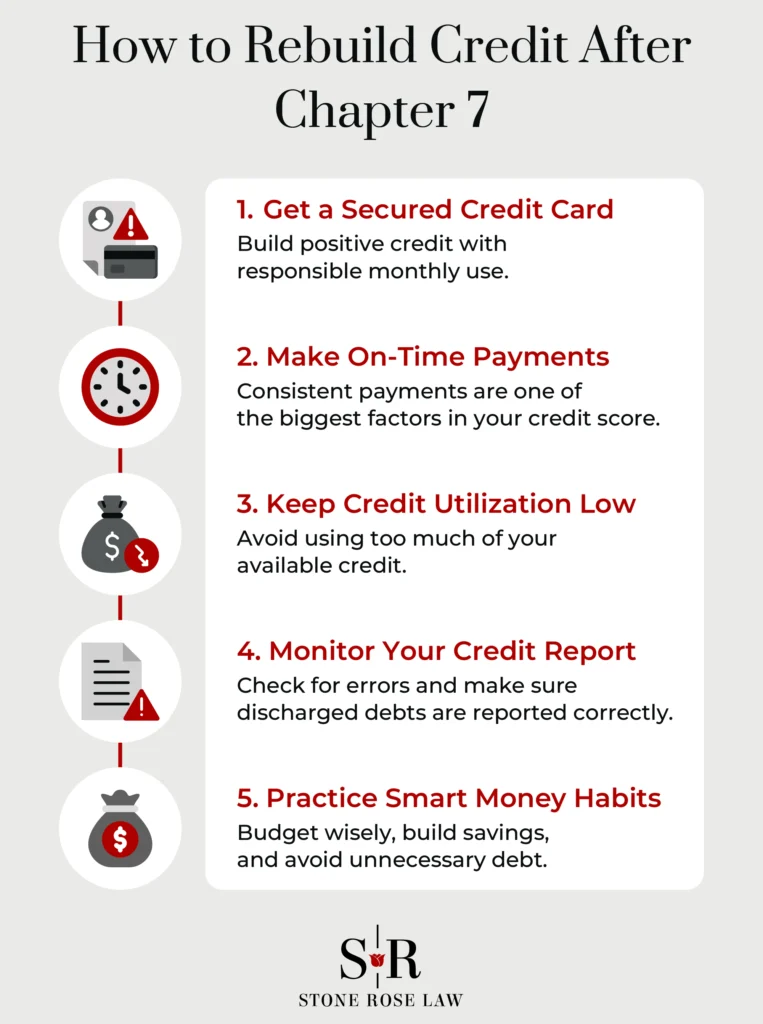
A secured credit card is frequently one of the first credit products available after bankruptcy. Because the card is backed by a refundable security deposit, lenders are often more willing to approve applicants with a recent Chapter 7 bankruptcy. Using the card for small purchases and paying the balance in full every month helps establish a positive payment history.
Credit Utilization
Credit utilization also plays an important role in rebuilding your credit. Credit utilization measures how much of your available credit you are using. Keeping balances below approximately 30% of your available credit limit, and preferably even lower, generally reflects responsible credit management.
Credit-Builder Loans
Some borrowers also benefit from a credit-builder loan. Unlike a traditional loan, the lender holds the loan proceeds while you make monthly payments. After the loan is paid in full, the funds are released to you, and your payment history is typically reported to the credit bureaus.
On-Time Payments
No rebuilding strategy is more important than consistently making on-time payments. Whether you are paying a credit card bill, a utility bill, a car loan, or a mortgage, payment history remains one of the largest factors affecting your credit score. Even a single missed payment can slow your progress.
Regular Credit Report Review
It is also wise to review your credit reports periodically after your discharge. Occasionally, discharged accounts continue reporting incorrect balances or fail to indicate that the debt was included in bankruptcy. Identifying and disputing reporting errors helps ensure your credit history accurately reflects your financial situation.
When Can You Get New Credit?
Qualifying for new credit after bankruptcy often happens sooner than many people expect.
Some lenders specialize in working with borrowers who have recently received a Chapter 7 discharge. Initial financing may involve higher interest rates or lower borrowing limits, but responsible use of new credit can gradually improve future lending opportunities.
Auto financing is often available shortly after discharge, although loan terms vary depending on income, credit history, and the lender’s underwriting standards.
Renting is often the first housing goal after a discharge. A bankruptcy on your credit report does not automatically disqualify you as a tenant—our guide on renting after bankruptcy in Arizona explains what local landlords weigh and how to strengthen your application.
Buying a home generally requires a longer waiting period.
Many borrowers become eligible for an FHA-insured mortgage approximately two years after a Chapter 7 discharge if they otherwise satisfy the lender’s income, employment, and credit requirements. Conventional mortgage programs frequently require a longer waiting period.
Building Long-Term Financial Stability
Chapter 7 is designed to give you a fresh start—a chance to reset your finances—but keeping that progress requires new financial habits.
Creating an emergency fund can reduce the likelihood that unexpected expenses will lead to new debt. Even modest monthly contributions can provide a financial cushion for vehicle repairs, medical expenses, or other unforeseen costs.
Following a realistic budget, borrowing only when necessary, paying balances on time, and reviewing your spending regularly can all help strengthen your financial position after bankruptcy. Over time, those habits not only improve your financial stability but also continue supporting your credit recovery.
Talk to a Stone Rose Law Arizona Bankruptcy Attorney
Life after Chapter 7 bankruptcy is about more than repairing a credit score. It is an opportunity to eliminate overwhelming debt, rebuild healthy financial habits, and move toward greater financial security.
If you are considering Chapter 7 bankruptcy or have questions about what to expect after receiving a discharge, Stone Rose Law can help you understand your options and guide you through every step of the process.
Contact our Arizona bankruptcy attorneys at (480) 739-2448 or use our online contact form today to schedule a consultation.
The post Life After Chapter 7 Bankruptcy appeared first on Stone Rose Law.