
Filing for Chapter 13 bankruptcy involves more than submitting a bankruptcy petition. Throughout the case, you must continue meeting certain tax obligations while you complete your court-approved repayment plan.
Understanding these Chapter 13 tax return requirements can help you avoid unnecessary delays, protect your bankruptcy case, and move closer to receiving a discharge.
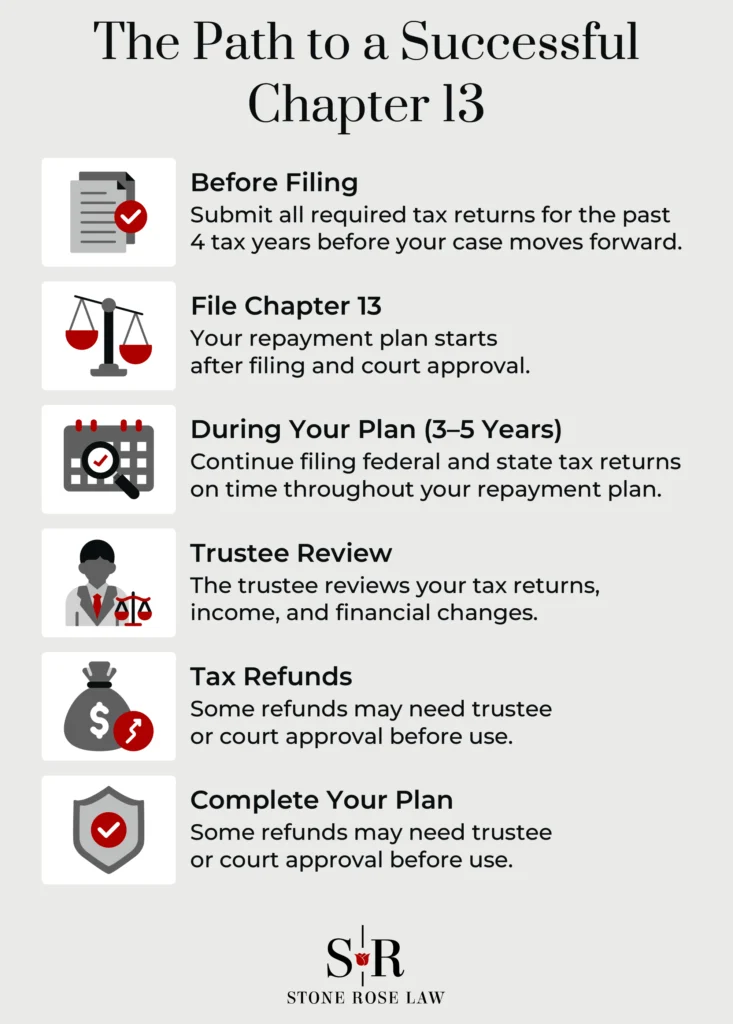
One of the most important requirements is staying current on your tax filings. Before your case can move forward, you generally must have filed all required federal income tax returns for the four tax years preceding your bankruptcy filing.
Once your case begins, you must continue filing your annual tax returns while your Chapter 13 case remains open, which is typically three to five years.
At Stone Rose Law, we help Arizona residents understand what is expected during Chapter 13 and work to prevent avoidable issues that can put a bankruptcy case at risk.
If you have questions about filing requirements or your repayment plan, call Stone Rose Law at (480) 739-2448 or use our online contact form for a free consultation.
Why Tax Returns Matter in Chapter 13
Unlike Chapter 7, Chapter 13 requires you to make monthly payments under a court-approved repayment plan. Because the plan is based largely on your income and ability to repay creditors, the bankruptcy court and trustee need accurate financial information throughout the case.
When you file, the automatic stay halts most collection efforts, but it does not pause your ongoing tax-filing duties.
Tax returns help verify your income, identify changes in your financial circumstances, and determine whether your plan should continue as approved or be modified. They also help the trustee evaluate issues such as disposable income, tax refunds, and your overall compliance with the Bankruptcy Code.
Past-Due Taxes Can Stall Your Chapter 13
One of the first Chapter 13 tax return requirements applies before your case can move forward.
Generally, you must have filed all required federal income tax returns for the four tax years preceding your bankruptcy filing, no later than the day before your first meeting of creditors. If required returns have not been filed, the court may dismiss your bankruptcy case before it progresses very far.
For most individuals, this means filing any overdue Form 1040 returns with the IRS before the deadline. Depending on your circumstances, state income tax returns may also need to be brought up to date.
If you are missing returns from prior years, it is often best to address those issues before filing Chapter 13 rather than trying to resolve them after your bankruptcy case begins.
Filing Tax Returns During Your Repayment Plan
Your responsibilities do not end once your bankruptcy case is filed.
Because a Chapter 13 repayment plan usually lasts between three and five years, you must continue filing all required federal and state income tax returns on time each year.
For most debtors, this means submitting Form 1040 annually and remaining current with all applicable IRS filing requirements. Filing returns on time helps demonstrate compliance with your bankruptcy obligations and provides the trustee with updated financial information throughout the case.
Failing to file tax returns while your Chapter 13 case is pending can create serious problems, even if your repayment plan payments remain current.
Providing Tax Returns to the Trustee
In addition to filing your returns with the IRS, many Chapter 13 trustees require debtors to provide copies of their returns or IRS tax transcripts during the case.
The trustee may request:
- Federal income tax returns
- IRS tax return transcripts
- Documentation regarding tax refunds
- Additional financial information if your income changes significantly
The trustee reviews these documents to determine whether your financial situation has changed since your bankruptcy was filed. If your income increases substantially, the trustee may seek to modify your repayment plan so that additional funds are available for creditors.
Tax Refunds During Chapter 13
Understanding how a tax refund during Chapter 13 is treated is one of the most common concerns filers have. A refund often represents income that was withheld from your pay during the year, so the trustee may view it as disposable income that should go toward your creditors.
Does Chapter 13 Take Your Tax Refund?
In many cases, yes. Because a refund may be considered part of the bankruptcy estate, the trustee may require you to turn it over for payment to creditors. Whether you must turn over a refund depends on the terms of your confirmed plan, local bankruptcy practice, and any orders entered by the bankruptcy court.
Can You Keep Your Tax Refund After Filing Chapter 13?
Sometimes. Some plans require debtors to surrender all future refunds, while others allow debtors to keep some or all of a refund under certain circumstances. Depending on your case, you may be able to keep all or part of the refund if it is needed for essential living expenses, such as emergency vehicle repairs, unexpected medical bills, or essential home repairs.
How to Keep My Tax Refund in Chapter 13
If you expect a refund and need it, the key is to act before it arrives. Discuss it with your bankruptcy attorney before filing your return or spending the money. In many districts, keeping a refund requires filing a plan modification that explains why the funds are necessary and unexpected.
You should never assume a refund is yours to spend while your Chapter 13 case remains pending — your attorney can determine whether court approval or trustee authorization is required first.
Tax Debts and Priority Claims
Not every tax obligation is treated the same way in bankruptcy.
Certain recent income tax debts qualify as priority claims that must be paid in full through your Chapter 13 repayment plan. Older tax debts may sometimes receive different treatment depending on the circumstances.
The IRS also publishes Publication 908, which provides general information about the federal tax consequences of bankruptcy. Although the publication can be helpful, it does not replace legal advice regarding your individual case.
What Happens If You Do Not File Your Tax Returns?
Failure to comply with tax filing requirements can jeopardize your bankruptcy case.
If required returns are not filed before the first meeting of creditors, the court may dismiss the case. If you stop filing annual returns after your case begins, the trustee may ask the court to dismiss the case or seek conversion to another chapter, if appropriate under the circumstances.
Failure to remain current on your tax obligations may also delay or prevent your bankruptcy discharge, leaving you responsible for debts that otherwise could have been resolved through Chapter 13.
How a Bankruptcy Attorney Can Help
Tax compliance is an important part of a successful Chapter 13 case. An attorney can help you determine whether all required returns have been filed, address outstanding tax issues before filing, communicate with the trustee, and resolve questions about tax refunds, plan modifications, or other issues that arise during your bankruptcy.
At Stone Rose Law, we guide Arizona residents through every stage of Chapter 13 bankruptcy, from preparing the initial filing to completing the repayment plan and obtaining a discharge.
If you have questions about Chapter 13 tax return requirements or your bankruptcy case, call Stone Rose Law at (480) 739-2448 or use our online contact form for a free consultation.
The post Chapter 13 Tax Return Requirements appeared first on Stone Rose Law.