
In most situations, the answer is no, you cannot sue someone after settling with their insurance.
Most settlements require a signed release of liability as part of a full and final settlement. Once you agree to settle a claim and sign the required documents, you generally waive your right to pursue additional legal action against the at-fault party for the same accident.
Before accepting any settlement offer, speak with an experienced Phoenix personal injury attorney. Stone Rose Law can review your case, explain your rights, and help you avoid giving up valuable claims.
Call (480) 631-3025 or use our online contact form today for a free consultation.
What Is a Release of Liability?
A release of liability is one of the most important documents in any personal injury settlement.
By signing a release form, you typically agree to:
- Accept the agreed-upon settlement amount.
- Release the at-fault party from further liability.
- Waive your right to file a lawsuit related to the accident.
- Resolve the claim through a full and final settlement.
Many people focus on the settlement check without realizing that signing a release usually ends their legal rights against the liable party.
Because the release form has significant legal consequences, it should never be signed without fully understanding its terms.
Why Does Signing a Release Matter?
Signing a release is often the point at which your legal rights change.
After signing a release of liability, you generally cannot:
- File a lawsuit against the driver.
- Sue the at-fault driver for additional damages.
- Reopen a settled claim simply because your injuries turned out to be more serious than expected.
- Seek additional compensation from the insurance company for the same bodily injury claim.
This is why it is so important to understand the full extent of your injuries before you accept a settlement.
What Happens if New Injuries Are Discovered?
One of the biggest risks of settling with their insurance too early is discovering additional injuries later.
Some accident victims initially believe they suffered only minor injuries, only to learn weeks or months later that they need:
- Surgery
- Future medical treatment
- Physical therapy
- Long-term pain management
- Additional diagnostic testing
Unfortunately, if you have already accepted a settlement and signed a release of liability, you generally cannot return to the insurance company seeking additional compensation for those newly discovered medical expenses.
For that reason, many personal injury attorneys recommend waiting until your condition is better understood before resolving a claim.
Are There Any Exceptions?
Although a signed settlement agreement usually prevents future lawsuits, there are limited situations where further legal action may still be possible.
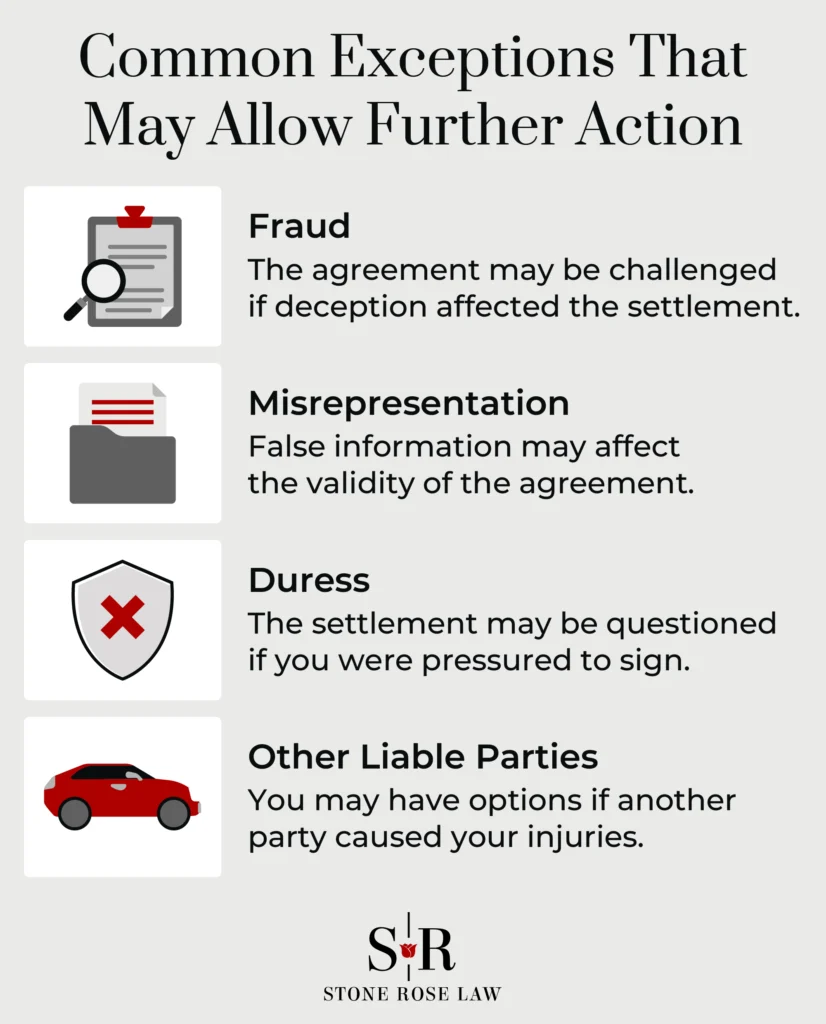
Fraud
If the settlement was obtained through fraud, a court may determine that the agreement should not be enforced.
Misrepresentation
A settlement may be challenged if one party intentionally made false statements that induced the other party to sign the agreement.
Duress
In rare cases, a person who signed a settlement under unlawful duress or coercion may have grounds to challenge the agreement.
These exceptions are uncommon and depend on the specific facts of each case.
Can You Sue Someone Else?
Even if you cannot sue the at-fault party after settling, you may still have claims against other responsible parties.
For example, additional legal action may be available if:
- Another driver contributed to the accident.
- A vehicle manufacturer shares responsibility.
- A government entity negligently maintained the roadway.
- Another liable party caused or contributed to your injuries.
Whether another claim remains available depends on the language of your settlement agreement and the facts surrounding the accident.
What if the Insurance Policy Wasn’t Enough?
Sometimes the insurance settlement reflects only the available policy limits.
If your damages exceed the available insurance coverage, additional legal options may exist depending on the circumstances.
For example, you may have:
- A third-party claim against another responsible party.
- Underinsured motorist coverage through your own car insurance policy.
- Other available sources of compensation.
An experienced personal injury lawyer can evaluate every potential avenue for recovery before you settle a claim.
Can Someone Sue You After Insurance Pays?
The answer to whether someone can sue you after you receive an insurance payment depends on whether the injured person signed a release of liability.
If the insurance company paid a settlement and the injured person signed a full and final settlement agreement, they generally cannot continue pursuing the same claim against you.
However, if no settlement agreement was signed or if only certain portions of the claim were resolved, additional legal action may still be possible.
Every case depends on the specific terms of the settlement documents.
How Long After an Accident Can You Sue?
In Arizona, the statute of limitations for most personal injury claims arising from a car accident is two years from the date of the accident under A.R.S. § 12-542.
If you fail to file a lawsuit before the statute of limitations expires, you may lose your right to recover damages altogether.
However, accepting a settlement and signing a release often ends your claim much sooner than the statute of limitations would otherwise require.
Should You Accept the First Settlement Offer?
Insurance adjusters often contact accident victims shortly after a collision.
An early settlement offer may seem attractive, particularly if you are facing mounting medical bills or lost wages.
However, the first offer is rarely enough to fully compensate you for:
- Medical expenses
- Future medical treatment
- Lost wages
- Pain and suffering
- Permanent injuries
- Reduced earning capacity
Once you accept a settlement and sign a release, you generally cannot ask for more money simply because your damages increased.
Having a personal injury attorney review the settlement offer before signing anything can help protect your rights.
Why You Should Speak With a Personal Injury Attorney First
Before settling with their insurance, it is important to understand exactly what rights you may be giving up.
A personal injury lawyer can:
- Review the settlement agreement.
- Explain the release of liability.
- Evaluate the value of your claim.
- Calculate future medical expenses.
- Determine whether additional liable parties exist.
- Negotiate with the insurance company.
- File a lawsuit when necessary.
An attorney can also determine whether accepting the proposed insurance settlement is in your best interests.
Contact Stone Rose Law Before You Sign Anything
In most cases, you cannot sue someone after settling with their insurance. Once you accept a settlement, sign a release of liability, and enter into a binding agreement, you generally waive your right to pursue a lawsuit against the at-fault party for the same accident.
Before signing any settlement agreement, make sure you understand exactly what rights you may be giving up. Stone Rose Law helps injury victims throughout Phoenix and across Arizona evaluate settlement offers, negotiate with insurance companies, and pursue the full compensation they deserve.
Call Stone Rose Law today at (480) 631-3025 or use our online contact form for a free consultation with an experienced personal injury attorney before you accept any insurance settlement.
The post Can You Sue Someone After Settling With Their Insurance? appeared first on Stone Rose Law.